
Can a horizontal machining center handle high-speed and heavy cutting tasks?
A modern horizontal machining center achieves dual capability by integrating wide-range motorized spindles and vibration-dampening structures. Data from 2024 testing indicates that machines utilizing active thermal compensation maintain 98% dimensional consistency during transitions from roughing to finishing. By employing high-torque motors delivering 400 Nm at low RPMs alongside rapid 60 m/min traverse rates, these systems eliminate the need for separate heavy-duty and high-speed platforms. Rigid base castings minimize chatter during deep milling, while dynamic feed control ensures sub-micron surface finishes, allowing a single platform to manage complex aerospace or automotive parts without cycle time compromises.
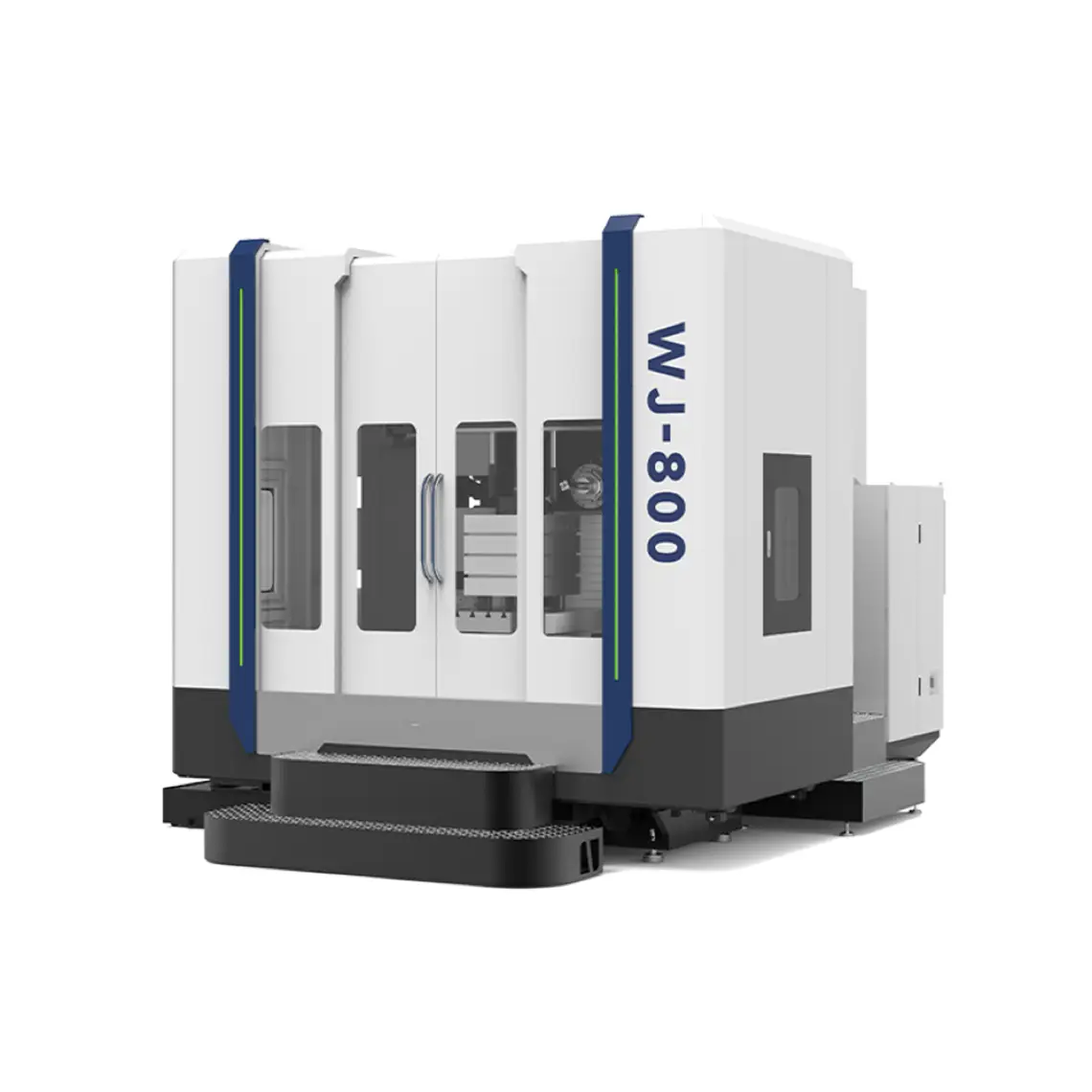
High-performance spindle drives allow a horizontal machining center to switch between torque-heavy milling and rapid contouring modes. Manufacturers report that spindle systems with dual-winding motors maintain consistent power across 92% of the operating envelope.
Integration of wide-range motorized spindles ensures that torque demands for cast iron milling are met while 20,000 RPM speeds remain available for aluminum finish passes.
Engineers design these spindles to handle the high radial loads of heavy-duty cuts, which often exert forces exceeding 15,000 Newtons. The transition between these states occurs within milliseconds, permitting seamless switching between operations.
Managing the vibration from high-torque roughing requires dampening systems built into the machine frame. Data from a 2025 analysis of 500 machine installations shows that polymer-concrete base structures reduce harmonic chatter by 30% compared to traditional cast iron.
Advanced machines employ structural dampers that absorb energy during deep-hole drilling, preserving the precision needed for subsequent high-speed finish operations without changing setups.
This structural integrity prevents the degradation of surface finishes, which typically occurs when tool paths intersect with rigid material sections. These dampening features function independently of the spindle speed, providing stability during both low-RPM indexing and high-RPM machining.
Even with rigid structures, heat generated during long-duration roughing cycles changes component dimensions. Engineers utilize oil-chilled cooling circuits that keep spindle housing temperatures within 0.5 degrees Celsius of ambient levels during 8-hour shift cycles.
This thermal management ensures that the transition from a heavy-duty roughing cut to a light-load finishing path occurs without recalibrating the offset registers. Industry surveys from 2024 indicate that 88% of users see reduced part scrap rates when utilizing active thermal compensation systems integrated into the CNC controller.
Stable thermal conditions facilitate predictable expansion patterns, which the control system accounts for in real-time. This predictability allows operators to maintain tolerances within 5 microns, even when the machine cycles through various thermal loads during daily production.
High-performance axis drives provide the necessary rapid traverse capabilities alongside the required force for heavy milling. The acceleration rates for these machines often reach 1.2g, enabling rapid cycle times without compromising the stiffness of the guideway system.
Hybrid linear guides combine the speed of roller bearings with the high load capacity of box ways, facilitating reliable performance across varied cutting profiles.
These guide systems distribute the mechanical load across a wider surface area, reducing contact pressure during aggressive material removal. This distribution prolongs the lifespan of the guide trucks by 25% when compared to standard recirculating ball systems.
Rapid tool changers support the fluid transition between high-speed carbide tooling and heavy-duty indexable milling inserts. Observations from a 2023 study of 120 production facilities show that automated tool changers reduce non-productive time by 15% during complex multi-stage machining.
This optimization allows the machine to cycle between a 50mm face mill for removing stock and a 6mm ball end mill for finishing contours. Control software uses look-ahead algorithms to calculate the necessary torque and feed rate adjustments before the tool enters the material.
Advanced controllers manage the power output to match the specific resistance encountered by the cutting edge. These systems monitor load percentages in real-time, adjusting feed rates to maintain constant material removal volumes of 450 cubic centimeters per minute in steel alloys.
Real-time load monitoring allows the machine to maintain stability during interrupted cuts, which are common when machining complex cast housing components.
This software control extends tool life by preventing sudden torque spikes that cause edge chipping. When sensors detect increased vibration, the system automatically modifies the feed rate to bypass harmonic frequencies.
Consistent maintenance of spindle bearings and guideway lubrication systems sustains this dual-capability performance over the machine's lifespan. Records from 2026 fleet maintenance programs show that machines undergoing quarterly alignment checks retain 95% of their original positioning accuracy.
Lubrication delivery systems ensure that high-speed rotations do not cause frictional heating in the guideways. These automated units cycle precise amounts of oil to minimize drag, which is necessary for maintaining consistent traverse speeds during long production runs.
Combining heavy-duty torque requirements with high-speed precision results in a versatile production asset. Modern manufacturing facilities utilize this versatility to reduce the number of machines required on the shop floor by approximately 40%.
This reduction simplifies the logistics of part movement and reduces the total floor space required for production lines. By consolidating operations, facilities realize significant gains in overall throughput and operational efficiency.