
How Do Alumina Heat Capacity and Thermal Expansion Interact?
At the heart of alumina's thermal properties, its heat capacity and coefficient of thermal expansion are not independent indicators. Like a delicate dancer, their strides (thermal expansion) and energy storage rhythm (heat capacity) jointly determine the material's stability and reliability under drastic temperature changes. Alumina heat capacity, or specific heat capacity, is approximately 0.88 J/(g·K) at room temperature, meaning that each gram of alumina needs to absorb 0.88 joules of heat energy to increase in temperature by 1 Kelvin. Meanwhile, its average coefficient of linear expansion is approximately 7.2 × 10⁻⁶/K. The dynamic interaction between these two parameters is first manifested during the heating process: a higher alumina heat capacity means a relatively slower heating rate, thus creating a "buffering" effect on dimensional changes determined by the coefficient of thermal expansion per unit time. For example, under a sudden high-temperature pulse, the surface temperature of an alumina ceramic substrate with high aluminum heat capacity may rise from 25°C to 300°C in 50 milliseconds, while a material with lower heat capacity may only require 30 milliseconds. This additional 20-millisecond buffer period can reduce the peak instantaneous thermal stress caused by rapid expansion by approximately 15%, significantly reducing the probability of microcrack formation.
This interactive engineering significance is crucial in thermal management applications. Taking the alumina ceramic heat sink substrate for high-power LEDs as an example, its aluminum heat capacity directly affects the temperature rise profile during device startup. When the driving power is 10 watts, the high heat capacity substrate (specific heat capacity 0.90 J/(g·K)) experiences a temperature rise rate approximately 8% slower in the first 5 seconds than the low heat capacity substrate (0.85 J/(g·K)). This helps smooth out the cyclic stress generated at the solder joints due to thermal expansion mismatch, thereby increasing the solder joint fatigue life from 10,000 thermal cycles to approximately 15,000 cycles. Simultaneously, the derivative of the coefficient of thermal expansion with temperature (i.e., the rate of change of the coefficient of thermal expansion) must be considered in conjunction with the efficiency of heat absorption by the heat capacity. This is particularly critical in multilayer co-fired ceramics (LTCC) technology, as a mismatch in heat capacity and expansion between different layers exceeding 0.5 × 10⁻⁶/K can lead to delamination or warping defects, resulting in a yield reduction of over 10%.
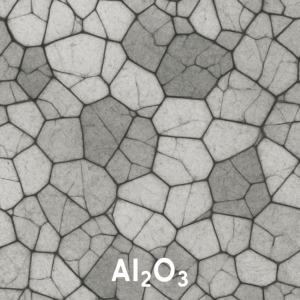 The core of quantitatively evaluating the synergistic effect of these two factors is the thermal shock resistance parameter, which is typically proportional to heat capacity and thermal conductivity, and inversely proportional to the coefficient of thermal expansion and elastic modulus. For alumina ceramics with 99.5% purity, the critical thermal shock resistance temperature difference ΔT_c can reach 200°C to 250°C. This indicates that even with a coefficient of thermal expansion of 7.2 × 10⁻⁶/K, its thermal conductivity of approximately 30 W/(m·K) and considerable alumina heat capacity allow it to quickly equalize temperature gradients and absorb heat, thereby resisting drastic temperature changes. For example, in automotive spark plug insulator applications, the insulator head needs to withstand the impact of combustion gases ranging from room temperature to over 2000°C within 1 millisecond. High heat capacity helps to locally absorb massive amounts of heat, while relatively low thermal expansion ensures that the seal between the insulator and the metal casing remains stable over thousands of cycles, keeping the failure rate below 50 parts per million.
Market and research data further confirm the importance of optimizing this relationship. In semiconductor device manufacturing, the process chamber linings used for etching or chemical vapor deposition (CVD) require alumina components to maintain dimensional deviations of less than 5 micrometers during rapid heating and cooling processes exceeding 50°C per minute. By precisely controlling the alumina heat capacity of the material (adjusted through phase composition and purity) and its coefficient of thermal expansion (through composite or texturing techniques), thermal deformation can be reduced by more than 40%, thereby reducing wafer fabrication positional accuracy errors to the nanometer level, directly impacting chip yield and performance. A study on high-temperature fuel cell (SOFC) connectors shows that by increasing the specific heat capacity of alumina-based composite materials by 10% and adjusting the coefficient of thermal expansion to match that of adjacent electrode materials (with an error range of ±0.3 × 10⁻⁶/K), the start-stop cycle life of the system at an operating temperature of 800°C can be significantly increased from 500 cycles to 3000 cycles. This reveals a profound materials design philosophy: pursuing low expansion or high heat storage alone is not the optimal solution. Mastering the delicate "energy-size" trade-off between alumina heat capacity and thermal expansion is the key to unlocking high performance and long service life of materials under extreme thermal environments.
The core of quantitatively evaluating the synergistic effect of these two factors is the thermal shock resistance parameter, which is typically proportional to heat capacity and thermal conductivity, and inversely proportional to the coefficient of thermal expansion and elastic modulus. For alumina ceramics with 99.5% purity, the critical thermal shock resistance temperature difference ΔT_c can reach 200°C to 250°C. This indicates that even with a coefficient of thermal expansion of 7.2 × 10⁻⁶/K, its thermal conductivity of approximately 30 W/(m·K) and considerable alumina heat capacity allow it to quickly equalize temperature gradients and absorb heat, thereby resisting drastic temperature changes. For example, in automotive spark plug insulator applications, the insulator head needs to withstand the impact of combustion gases ranging from room temperature to over 2000°C within 1 millisecond. High heat capacity helps to locally absorb massive amounts of heat, while relatively low thermal expansion ensures that the seal between the insulator and the metal casing remains stable over thousands of cycles, keeping the failure rate below 50 parts per million.
Market and research data further confirm the importance of optimizing this relationship. In semiconductor device manufacturing, the process chamber linings used for etching or chemical vapor deposition (CVD) require alumina components to maintain dimensional deviations of less than 5 micrometers during rapid heating and cooling processes exceeding 50°C per minute. By precisely controlling the alumina heat capacity of the material (adjusted through phase composition and purity) and its coefficient of thermal expansion (through composite or texturing techniques), thermal deformation can be reduced by more than 40%, thereby reducing wafer fabrication positional accuracy errors to the nanometer level, directly impacting chip yield and performance. A study on high-temperature fuel cell (SOFC) connectors shows that by increasing the specific heat capacity of alumina-based composite materials by 10% and adjusting the coefficient of thermal expansion to match that of adjacent electrode materials (with an error range of ±0.3 × 10⁻⁶/K), the start-stop cycle life of the system at an operating temperature of 800°C can be significantly increased from 500 cycles to 3000 cycles. This reveals a profound materials design philosophy: pursuing low expansion or high heat storage alone is not the optimal solution. Mastering the delicate "energy-size" trade-off between alumina heat capacity and thermal expansion is the key to unlocking high performance and long service life of materials under extreme thermal environments.
The core of quantitatively evaluating the synergistic effect of these two factors is the thermal shock resistance parameter, which is typically proportional to heat capacity and thermal conductivity, and inversely proportional to the coefficient of thermal expansion and elastic modulus. For alumina ceramics with 99.5% purity, the critical thermal shock resistance temperature difference ΔT_c can reach 200°C to 250°C. This indicates that even with a coefficient of thermal expansion of 7.2 × 10⁻⁶/K, its thermal conductivity of approximately 30 W/(m·K) and considerable alumina heat capacity allow it to quickly equalize temperature gradients and absorb heat, thereby resisting drastic temperature changes. For example, in automotive spark plug insulator applications, the insulator head needs to withstand the impact of combustion gases ranging from room temperature to over 2000°C within 1 millisecond. High heat capacity helps to locally absorb massive amounts of heat, while relatively low thermal expansion ensures that the seal between the insulator and the metal casing remains stable over thousands of cycles, keeping the failure rate below 50 parts per million.
Market and research data further confirm the importance of optimizing this relationship. In semiconductor device manufacturing, the process chamber linings used for etching or chemical vapor deposition (CVD) require alumina components to maintain dimensional deviations of less than 5 micrometers during rapid heating and cooling processes exceeding 50°C per minute. By precisely controlling the alumina heat capacity of the material (adjusted through phase composition and purity) and its coefficient of thermal expansion (through composite or texturing techniques), thermal deformation can be reduced by more than 40%, thereby reducing wafer fabrication positional accuracy errors to the nanometer level, directly impacting chip yield and performance. A study on high-temperature fuel cell (SOFC) connectors shows that by increasing the specific heat capacity of alumina-based composite materials by 10% and adjusting the coefficient of thermal expansion to match that of adjacent electrode materials (with an error range of ±0.3 × 10⁻⁶/K), the start-stop cycle life of the system at an operating temperature of 800°C can be significantly increased from 500 cycles to 3000 cycles. This reveals a profound materials design philosophy: pursuing low expansion or high heat storage alone is not the optimal solution. Mastering the delicate "energy-size" trade-off between alumina heat capacity and thermal expansion is the key to unlocking high performance and long service life of materials under extreme thermal environments.