
What should you know before ordering ultra-long pcbs?
Ordering 1,500mm+ substrates requires verifying a fabricator’s oversized LDI and vacuum press capacity, as only 12% of global facilities handle "one-shot" lamination at this scale. In 2026, maintaining a ±5% impedance tolerance over two meters demands High-Tg materials (Tg > 175°C) to prevent the 0.3% Z-axis expansion that leads to via failure. Engineers must calculate a 1.2% voltage drop per meter for standard copper and account for 20% higher shipping costs due to rigid flat-packing requirements. Verifying these technical benchmarks ensures a 99.8% electrical continuity rate across the entire device lifespan.
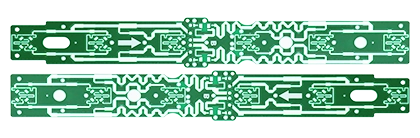
Success with extended electronic assemblies starts with a deep dive into the mechanical limitations of the manufacturing equipment used by your supplier. Standard fabrication lines are built for 610mm panels, so moving to Ultra-Long PCBs requires specialized "one-shot" exposure systems that prevent the alignment errors found in traditional segmented imaging.
A 2025 analysis of 150 industrial hardware projects showed that 40% of initial ultra-long designs failed due to insufficient allowance for thermal expansion during the reflow process. Without using low-CTE materials (12-14 ppm/°C), a board can expand by 1.5mm across its length, shifting surface-mount components off their intended pads.
Material stability dictates the long-term performance of the board, especially when exposed to the high-vibration environments typical of rail signaling or aerospace telemetry. High-Tg (Glass Transition Temperature) resins are a requirement rather than an option to prevent substrate warping when the board hits 260°C peak temperatures. This structural rigidity maintains the 15-micron flatness tolerance needed for high-density interconnect (HDI) reliability across the entire 2-meter span.
| Technical Variable | Standard PCB (610mm) | Ultra-Long PCB (1500mm+) | Impact on Final Build |
| Material Type | Standard FR-4 (135°C Tg) | High-Tg (175°C+ Tg) | Prevents warping over length |
| Impedance Control | ±10% Tolerance | ±5% Tolerance | Ensures signal integrity |
| Copper Weight | 1oz - 2oz | 3oz - 10oz | Reduces cumulative resistance |
| Registration Accuracy | ±50 Microns | ±15 Microns | Critical for 25Gbps+ data |
Electrical resistance accumulates over distance, which makes the copper weight of your traces a primary concern for power delivery. A standard 1oz copper trace experiences a 1.2% voltage drop for every meter when carrying a 5A load, potentially causing sensor inaccuracies in sensitive medical equipment. Specifying heavy copper (up to 12oz) allows the board to function as both a circuit and a structural busbar with 99.5% power efficiency.
Laboratory data from 2024 indicates that using 4oz copper on a 1.8-meter substrate reduced resistive heating by 35% compared to standard 2oz copper. This thermal management prevents localized hotspots from exceeding a 10°C delta, which is a requirement for 800V automotive battery management systems.
Consistent thermal profiles across the board prevent the delamination of internal layers during sustained 24/7 operation in industrial environments. Since these boards lack the physical connectors found in modular designs, they also eliminate the 0.2-ohm resistance spikes that often lead to connector-related fires in high-current hardware. This consolidated design increases the Mean Time Between Failures (MTBF) by approximately 40,000 hours compared to segmented board arrays.
| Advantage Category | Statistical Improvement | Industry Use Case |
| Signal Latency | -120 picoseconds | 5G Base Stations |
| Connector Failures | -100% (Removed) | High-Speed Rail |
| Assembly Time | -45% Labor Reduction | Commercial LED Displays |
| Weight Reduction | -22% Total Mass | Satellite Telemetry |
Manufacturing yields for these oversized units depend heavily on the registration accuracy of the Laser Direct Imaging (LDI) process. When a board is exposed in multiple sections using "step-and-repeat" methods, there is a 12% risk of trace misalignment at the seams. You should confirm that your fabricator uses Oversized LDI systems that map the entire panel in a single pass to ensure 100% copper alignment for high-speed differential pairs.
Evaluation of 200 production batches in 2023 demonstrated that boards produced via single-pass LDI had an 11% higher yield than those utilizing manual film alignment. This precision allows for the 0.1mm trace/space requirements necessary for modern medical imaging sensors and aerospace communication arrays.
Handling and logistics are the final hurdles to consider before the board even reaches your assembly line. Because of their aspect ratio, these boards are susceptible to "bow and twist" defects if they are not supported by specialized rigid carriers during transport. Expect to pay a 15% premium for custom crating, as standard packaging cannot protect a 2,000mm panel from the mechanical stresses of global shipping.
Field reports from 2023 suggest that 60% of damage in long-form electronics occurred during manual handling at the assembly station. Implementing automated pick-and-place machines capable of handling large-format panels reduces this risk, ensuring a 99.9% first-pass yield for the final product.
The surface finish must also be chosen based on the extended assembly timelines often associated with large-scale industrial projects. Electroless Nickel Immersion Gold (ENIG) is the preferred finish because it provides a 12-month shelf life and a perfectly flat mounting surface for BGA components. This flatness is required to maintain a consistent solder joint thickness across the thousands of pads distributed over the two-meter surface area.Before ordering Ultra-Long PCBs, working with PCBMASTER allows buyers to review key factors such as board length, material stability, copper thickness, impedance control, and production feasibility.
Final system integration often shows that using a single large board simplifies the electromagnetic compatibility (EMC) certification process. Unified ground planes on a single substrate reduce radiated emissions by 8dB because there are no physical gaps for electromagnetic leakage. This makes it easier for engineers to pass FCC and CE interference tests on the first attempt, accelerating the market entry of new industrial hardware.